
Introduction: Embracing the Future of Orthopedic Care
Orthopedic conditions, ranging from chronic osteoarthritis to acute sports injuries, can significantly diminish quality of life. For decades, the standard treatment path often involved pain management, physical therapy, and, eventually, invasive surgery. However, a revolutionary approach is transforming this landscape: Orthopedic Stem Cell Treatment. This cutting-edge field of regenerative medicine harnesses the body's natural healing capabilities to repair and regenerate damaged tissues, offering a minimally invasive alternative for patients seeking long-term relief and improved function.
Understanding Orthopedic Stem Cell Therapy
Stem cell therapy is a form of orthobiologics, which uses natural substances derived from the body to promote faster healing. At its core, the treatment involves introducing concentrated stem cells—the body's master cells—into an injured or degenerated area. These cells possess the unique ability to differentiate into various cell types (like cartilage, bone, tendon, or muscle) and to orchestrate a powerful healing response.
The Science Behind the Healing
The primary stem cells used in orthopedic applications are Mesenchymal Stem Cells (MSCs), typically sourced from the patient's own bone marrow or adipose (fat) tissue (autologous sources). When injected into the site of injury, MSCs perform several critical functions:
- Differentiation: They can transform into the specific cells needed to repair the damaged tissue, such as chondrocytes (cartilage cells) or osteoblasts (bone cells).
- Anti-Inflammatory Action: They release potent anti-inflammatory molecules that reduce pain and swelling in the joint.
- Paracrine Signaling: They secrete growth factors and cytokines that stimulate the surrounding native cells to accelerate the natural repair process.
- Angiogenesis: They promote the formation of new blood vessels, which is crucial for delivering nutrients and oxygen to the healing site.
Key Applications of Orthopedic Stem Cell Treatment
The versatility of stem cell therapy makes it a viable option for a wide range of musculoskeletal issues. It is increasingly being used to treat conditions that were previously considered only treatable with surgery.
Stem Cell Therapy for Knee Pain and Osteoarthritis
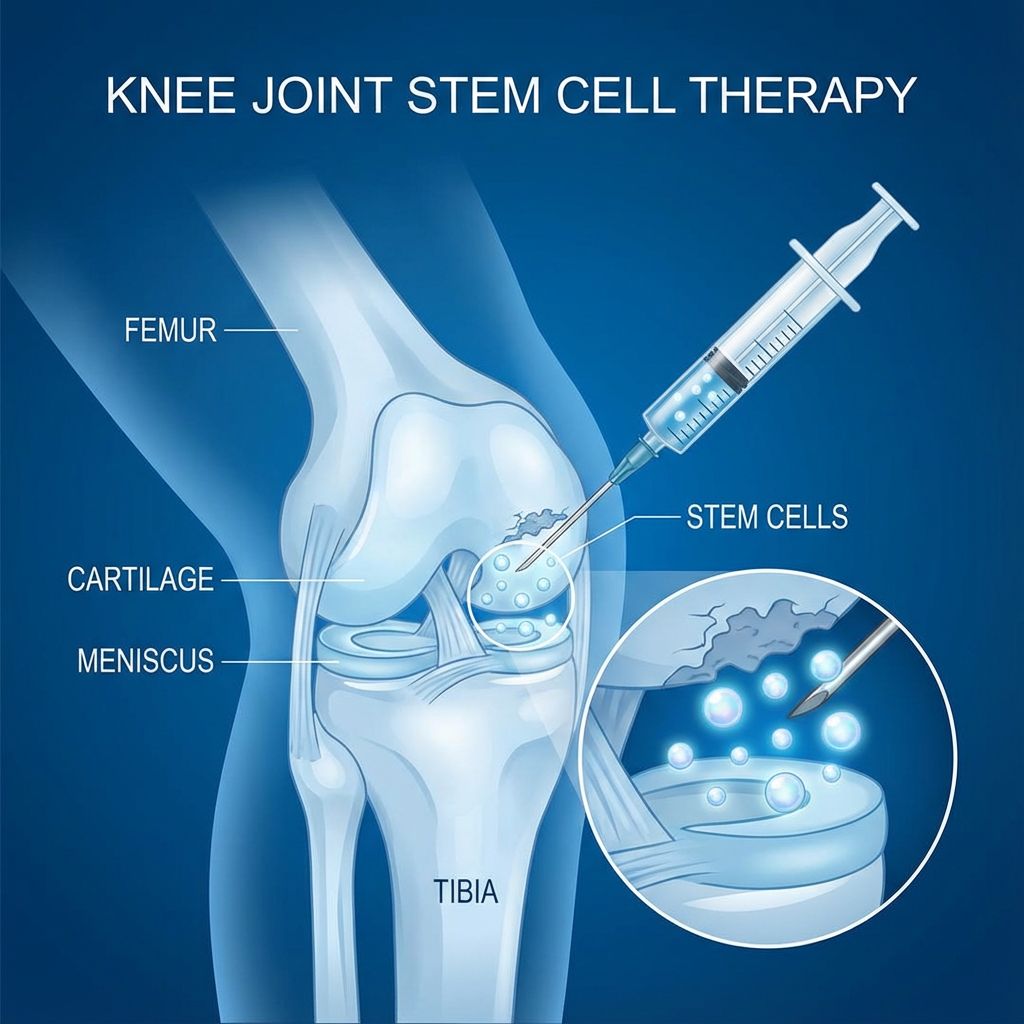
One of the most common and successful applications is stem cell therapy for knee pain. Osteoarthritis (OA) is a degenerative joint disease where the protective cartilage wears down, leading to bone-on-bone friction, pain, and stiffness. Stem cell injections into the knee joint aim to:
- Slow down or halt the progression of cartilage degeneration.
- Reduce chronic inflammation and associated pain.
- Potentially stimulate the growth of new, healthy cartilage tissue.
For patients suffering from mild to moderate knee OA, this treatment offers a chance to postpone or even avoid total knee replacement surgery.
Treating Other Joint and Soft Tissue Injuries
Beyond the knee, orthopedic stem cell treatment is effectively used for:
- Shoulder: Rotator cuff tears (partial), labral tears, and shoulder osteoarthritis.
- Hip: Early-stage avascular necrosis (AVN), labral tears, and hip osteoarthritis.
- Spine: Degenerative disc disease (DDD) and facet joint arthritis.
- Tendons and Ligaments: Chronic Achilles tendonitis, plantar fasciitis, and partial tears of ligaments (e.g., ACL, MCL).
The Procedure: What to Expect
Orthopedic stem cell therapy is an outpatient procedure, meaning no hospital stay is required. The process is typically completed in a few hours and involves three main steps:
1. Cell Harvesting
The source of the stem cells is determined by the physician. For bone marrow-derived stem cells (BMAC), a small sample is safely extracted from the patient's hip bone (iliac crest) using a local anesthetic. For adipose-derived stem cells, a mini-liposuction procedure is performed to harvest fat tissue. This step is minimally uncomfortable and done under sterile conditions.
2. Cell Processing and Concentration
The harvested tissue is then processed in a specialized centrifuge machine. This process separates and concentrates the stem cells and other beneficial growth factors, creating a potent therapeutic solution. This concentrated solution is often combined with Platelet-Rich Plasma (PRP) to further enhance the healing environment.
3. Injection
The concentrated stem cell solution is precisely injected into the injured joint or tissue. Crucially, this step is performed under the guidance of advanced imaging technology, such as fluoroscopy (X-ray) or ultrasound, to ensure the cells are delivered exactly to the site of damage for maximum efficacy.
Why Choose Stem Cell Therapy for Knee Pain in Malaysia?
Malaysia has emerged as a leading hub for regenerative medicine in Southeast Asia, attracting both local and international patients. The country boasts world-class medical facilities, highly trained orthopedic specialists, and a commitment to adopting the latest medical technologies.
Choosing stem cell therapy for knee pain Malaysia offers several distinct advantages:
- Expertise: Access to pioneers and experienced practitioners in the field of orthobiologics.
- Quality of Care: Clinics adhere to stringent international standards for safety and efficacy.
- Affordability: The cost of treatment is often significantly lower than in Western countries, without compromising on quality.
- Focus on Research: Malaysian institutions, particularly in Kuala Lumpur, have been at the forefront of stem cell research, particularly in cartilage regeneration protocols.
Our clinic, located at No 27M, Jalan SS 21/56b, Damansara Utama, 47400 Petaling Jaya, Selangor, Malaysia, is dedicated to providing personalized and advanced regenerative treatments.
Benefits and Advantages Over Traditional Surgery
The decision to pursue orthopedic stem cell treatment often comes down to the compelling benefits it offers compared to traditional surgical interventions:
| Feature | Orthopedic Stem Cell Therapy | Traditional Surgery (e.g., Joint Replacement) |
|---|---|---|
| Invasiveness | Minimally invasive (injection) | Highly invasive (large incision, joint alteration) |
| Recovery Time | Short (days to weeks) | Long (months of intensive rehabilitation) |
| Risk of Rejection | Virtually none (uses patient's own cells) | Possible (requires careful matching and monitoring) |
| Anesthesia | Local anesthetic | General or spinal anesthesia |
| Goal | Tissue regeneration and natural repair | Joint replacement or structural alteration |
| Complications | Low risk, primarily temporary soreness | Higher risk (infection, blood clots, hardware failure) |
Safety and Efficacy
As an autologous treatment (using the patient's own cells), the risk of adverse reactions, disease transmission, or immunological rejection is extremely low. While the field is still evolving, numerous clinical studies and real-world outcomes demonstrate the safety and effectiveness of MSC-based therapies for various orthopedic conditions. Patients typically experience a gradual reduction in pain and improvement in joint function over several weeks to months as the regeneration process takes hold.
Is Orthopedic Stem Cell Therapy Right for You?
Stem cell therapy is not a one-size-fits-all solution. It is most effective for patients with mild to moderate joint degeneration or chronic soft tissue injuries. A thorough consultation, including a review of medical history and diagnostic imaging (MRI, X-ray), is essential to determine candidacy.
Learn more about our Platelet-Rich Plasma (PRP) Therapy services.
Explore our comprehensive guide to Sports Injury Rehabilitation.
Take the Next Step Towards a Pain-Free Life
If you are tired of living with chronic joint pain and are seeking a non-surgical, regenerative solution, orthopedic stem cell treatment may be the answer.
Schedule a Consultation Today Contact us for more information about stem cell therapy for knee pain Malaysia