
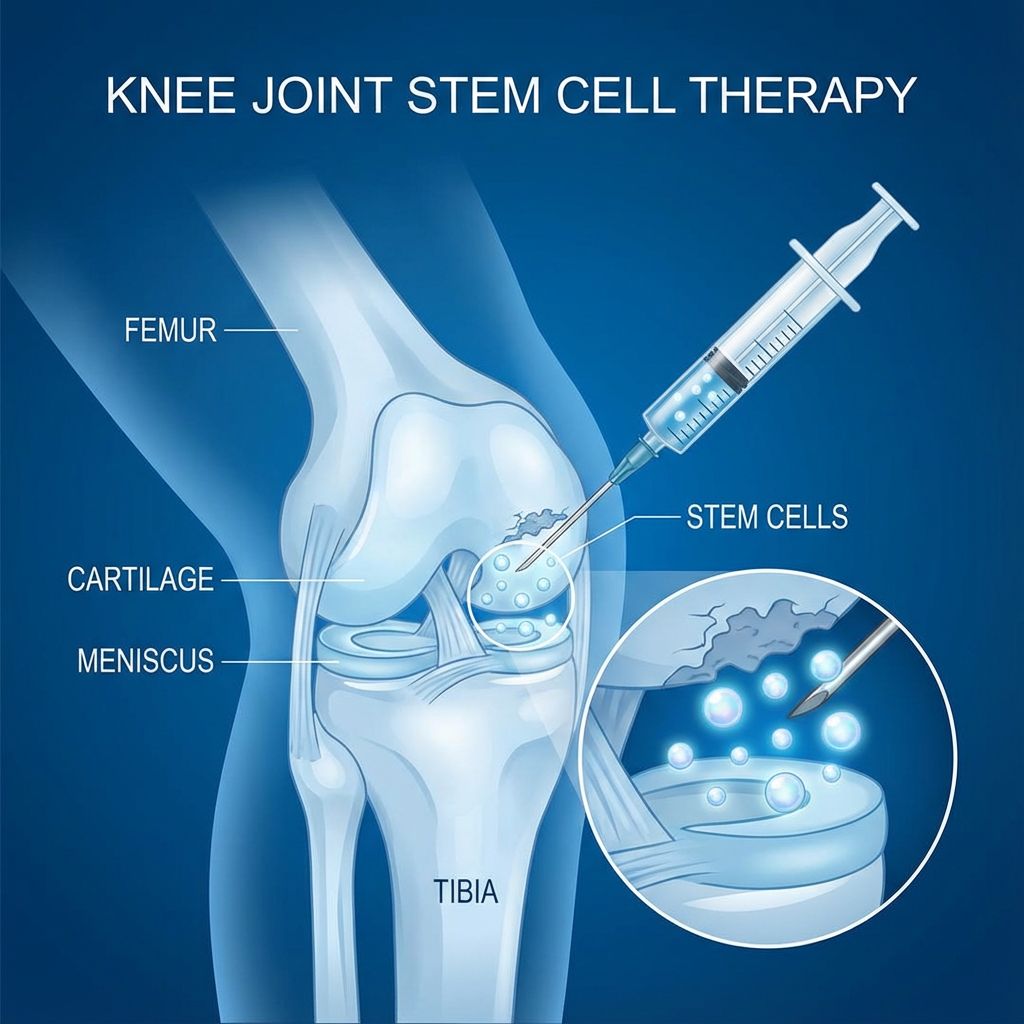
Introduction: Understanding Knee Osteoarthritis (KOA)
Knee Osteoarthritis (KOA) is a debilitating condition that affects millions worldwide, characterized by the breakdown of joint cartilage and underlying bone. This "wear and tear" disease leads to chronic pain, stiffness, and loss of mobility, significantly impacting the quality of life. Traditional treatments often focus on managing symptoms through medication, physical therapy, and eventually, total knee replacement surgery. However, a revolutionary approach in regenerative medicine is offering new hope: Stem Cell Therapy.
The Promise of Stem Cell Therapy for KOA
Stem cell therapy utilizes the body's natural healing mechanisms to repair and regenerate damaged tissues, offering a biological solution to a mechanical problem. Specifically, Mesenchymal Stem Cells (MSCs) are the focus of this treatment. These powerful, multipotent cells are sourced from various tissues, including bone marrow and adipose tissue, and possess unique properties that make them an ideal candidate for treating degenerative conditions like KOA:
1. Anti-inflammatory Effects: One of the most critical functions of MSCs is their ability to modulate the local immune environment. They release powerful anti-inflammatory cytokines and chemokines that effectively "turn down" the chronic, destructive inflammation that drives cartilage degradation in the knee joint. This reduction in inflammation is key to slowing the disease's progression and alleviating discomfort.
2. Pain Reduction: The combined effect of reducing inflammation and promoting tissue healing leads to a significant and sustained decrease in knee pain. Unlike temporary pain relief from medications, stem cell therapy addresses the underlying cause of the pain, offering a more durable solution for patients suffering from chronic discomfort.
3. Tissue Regeneration and Repair: MSCs are not just anti-inflammatory agents; they are also powerful repair facilitators. They have the potential to differentiate into various cell types, including chondrocytes (cartilage cells), and, more importantly, they release a host of growth factors, exosomes, and signaling molecules. These bioactive factors stimulate the body's own resident cells to initiate repair processes, helping to stabilize the joint environment and potentially regenerate damaged cartilage and subchondral bone.
4. Improved Function and Mobility: The ultimate goal of any KOA treatment is to restore function. Clinical studies consistently show that patients who undergo stem cell treatment experience measurable improvements in knee function scores, increased range of motion, and a better overall quality of life. This improvement in mobility allows patients to return to daily activities and a more active lifestyle with less reliance on pain medication [1] [2] [3]. The regenerative approach aims to restore the natural biomechanics of the knee, which is a significant advantage over purely palliative treatments.
The safety profile of autologous (using the patient's own cells) MSC therapy is also highly favorable, with most studies reporting only minor, temporary side effects related to the injection site. This makes it a compelling option for patients seeking a low-risk, high-reward intervention.
How Stem Cell Treatment Works: The Procedure
The stem cell procedure for knee osteoarthritis is minimally invasive and typically performed on an outpatient basis. The process involves a few key steps:
1. Source Material Collection
Stem cells are usually harvested from the patient's own body (autologous), most commonly from adipose tissue (fat) or bone marrow. Adipose-derived stem cells (ADSCs) are often preferred due to the ease of collection and the high concentration of MSCs they contain.
2. Cell Processing and Concentration
The collected tissue is processed in a specialized laboratory environment to isolate and concentrate the Mesenchymal Stem Cells. This ensures that a high number of viable, potent cells are prepared for injection.
3. Intra-Articular Injection
The concentrated stem cell solution is then carefully injected directly into the affected knee joint. This is often performed under ultrasound or fluoroscopic guidance to ensure precise placement into the joint space. The entire injection process is quick, and patients can typically return home shortly after.
Why Choose Regenerative Medicine Over Traditional Surgery?
While total knee replacement (TKR) is a proven solution for end-stage KOA, it is a major surgery with significant recovery time and potential risks. Stem cell therapy offers a compelling alternative, particularly for patients with mild to moderate KOA or those who wish to delay or avoid surgery:
| Feature | Stem Cell Therapy | Total Knee Replacement (TKR) |
|---|---|---|
| Invasiveness | Minimally invasive (injection) | Major surgery |
| Recovery Time | Days to weeks | Months |
| Anesthesia | Local anesthesia or light sedation | General or spinal anesthesia |
| Goal | Tissue repair and regeneration | Joint replacement |
| Risk | Low risk, primarily injection-related | Higher risk (infection, blood clots, implant failure) |
Stem cell therapy is not a cure, but a powerful biological tool that can slow the progression of the disease and significantly alleviate symptoms, offering a chance to restore natural joint function.
Stem Cell Therapy in Malaysia: Expertise and Accessibility
Malaysia has emerged as a leading destination for regenerative medicine, offering world-class medical expertise combined with competitive costs. Our clinic, located in Petaling Jaya, Selangor, is at the forefront of this medical advancement.
Local Advantage: Petaling Jaya, Selangor
Choosing a local clinic in Petaling Jaya, such as ours at No 27M, Jalan SS 21/56b, Damansara Utama, 47400 Petaling Jaya, Selangor, Malaysia, provides patients with several benefits:
- Accredited Facilities: Treatment is conducted in facilities that adhere to stringent international standards for cell processing and patient care.
- Experienced Specialists: Our team includes orthopedic and regenerative medicine specialists with extensive experience in stem cell applications for KOA.
- Cost-Effectiveness: Patients can access innovative treatments at a fraction of the cost compared to many Western countries, without compromising on quality [15].
Is Stem Cell Therapy Right for You?
Stem cell therapy is generally suitable for individuals with mild to moderate knee osteoarthritis who are looking for a non-surgical option to manage pain and improve function. A comprehensive consultation with our specialists is the first step. We will review your medical history, imaging (X-rays, MRI), and discuss your treatment goals to determine if you are a good candidate.
Next Steps: Take Control of Your Knee Health
Don't let knee pain dictate your life. Explore the possibilities of regenerative medicine.
Further Reading
- What is Regenerative Medicine? - Learn about the science behind our treatments.
- Stem Cell Therapy for Shoulder Pain - See how stem cells can treat other joints.
- Our Clinic Location and Contact Details - Find directions to our clinic in Damansara Utama.
Conclusion
Stem cell therapy represents a paradigm shift in the treatment of knee osteoarthritis. By harnessing the body's own power to heal, it offers a safe, minimally invasive, and effective path to pain relief and restored mobility. If you are seeking an advanced, non-surgical solution for your knee pain, our clinic in Petaling Jaya, Malaysia, is ready to guide you through your regenerative journey.
References
[1] Clinical efficacy and safety of stem cell therapy for knee ... (https://pmc.ncbi.nlm.nih.gov/articles/PMC7220405/)
[2] Efficacy and safety of mesenchymal stem cells in knee ... (https://stemcellres.biomedcentral.com/articles/10.1186/s13287-025-04252-2)
[3] Decadal analysis of efficacy and safety profiles ... (https://www.sciencedirect.com/science/article/pii/S0531556524001025)
[15] Stem Cell Therapy for Knee Osteoarthritis in Malaysia (https://www.placidway.com/article/5658/Egyptians-Head-to-Malaysia-for-Innovative-Knee-Osteoarthritis-Stem-Cell-Therapy)