
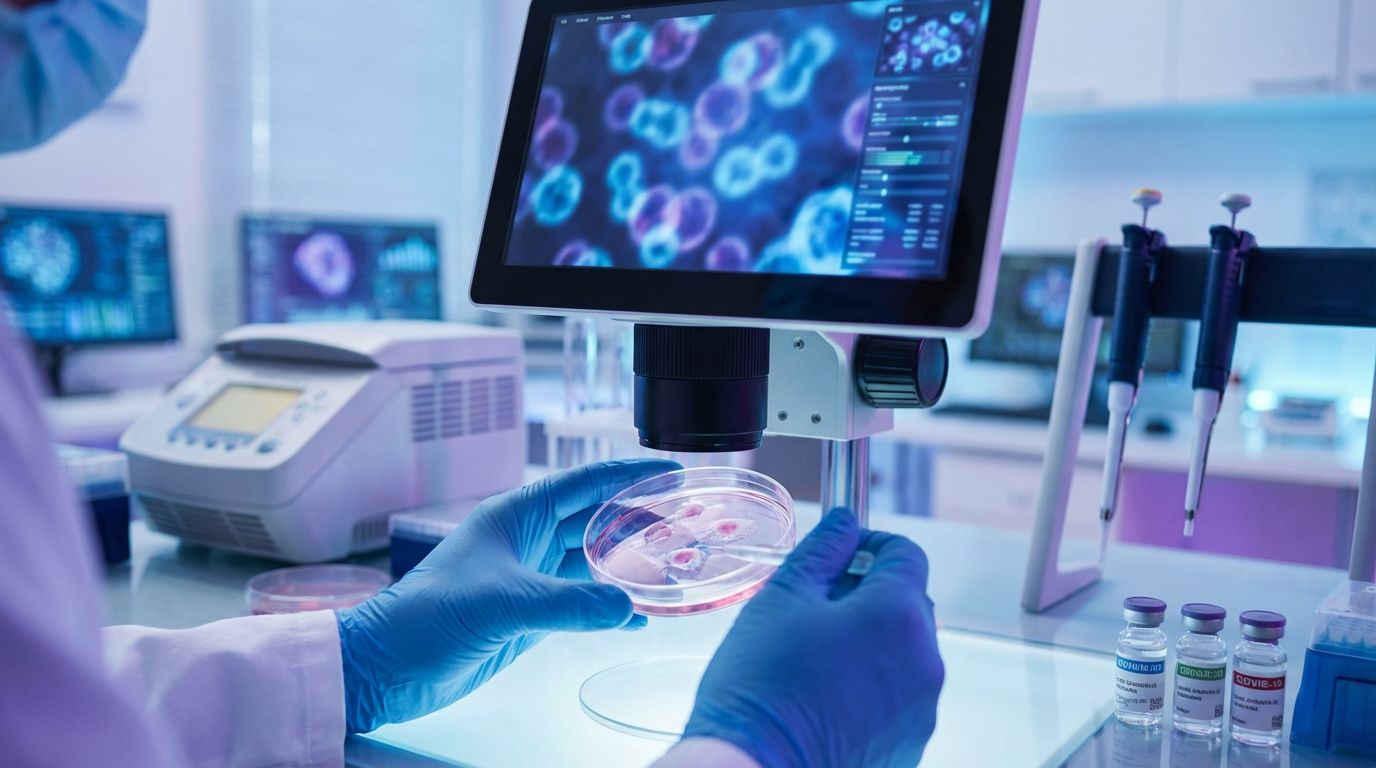
The core challenge in T2D treatment is the inability to restore the body's natural ability to regulate glucose. Insulin resistance prevents cells from properly utilizing insulin, while the pancreas struggles to produce enough insulin to compensate. This progressive failure highlights the need for a regenerative medicine approach—a treatment that can repair or replace damaged tissues and restore physiological function. Stem cell therapy has emerged as the most promising avenue to achieve this goal.
The Science of Stem Cell Therapy for T2D
Stem cell therapy for T2D is not a single treatment but a collection of advanced techniques aimed at two primary therapeutic targets: improving insulin sensitivity and regenerating functional β-cells [2].
Mesenchymal Stem Cells (MSCs) and Immunomodulation
The most commonly studied cell type in T2D therapy is the Mesenchymal Stem Cell (MSC), typically sourced from bone marrow or adipose (fat) tissue. MSCs do not directly become β-cells, but they exert powerful therapeutic effects through their paracrine (signaling) and immunomodulatory properties [3].
MSCs work by:
- Alleviating Insulin Resistance: MSCs release anti-inflammatory and growth factors that can increase the function of glucose transporter-4 (GLUT4) and improve the phosphorylation of insulin receptor substrate-1 (IRS-1) in insulin-target tissues like muscle and liver. This effectively makes the body's cells more responsive to insulin [4].
- Reducing Chronic Inflammation: T2D is closely linked to chronic, low-grade inflammation. MSCs suppress the activity of inflammatory cells and promote a more balanced immune environment, which helps protect existing β-cells from further damage [5].
- Promoting Tissue Repair: The secreted factors from MSCs can stimulate the repair and regeneration of damaged pancreatic tissue, potentially leading to the formation of new, functional β-cells, a process known as neogenesis.
Induced Pluripotent Stem Cells (iPSCs) and β-Cell Replacement
A more direct approach involves using Induced Pluripotent Stem Cells (iPSCs). These are adult cells that have been genetically reprogrammed to an embryonic-like state, allowing them to differentiate into virtually any cell type. Researchers have successfully guided iPSCs to mature into functional, insulin-producing β-cells in the lab [6].
The goal of this approach is to transplant these lab-grown β-cells into the patient, effectively replacing the damaged or lost cells and restoring natural insulin production. While highly promising, this method is still largely in the clinical trial phase, focusing on overcoming challenges like immune rejection and ensuring long-term cell survival [7].
Clinical Progress and Promising Results
The global landscape of stem cell research for T2D is rapidly evolving. Clinical trials are underway worldwide, including a number of studies focusing on the safety and efficacy of MSC infusions.
In a landmark study, researchers in China reported a significant breakthrough using a cell transplantation method. The study claimed that most patients were able to become insulin-free for an extended period, with one patient maintaining independence from insulin for eight years [8]. While these results are preliminary and require further validation, they underscore the transformative potential of this therapy.
For patients in Malaysia, access to advanced regenerative treatments is becoming increasingly available. Clinics specializing in stem cell therapy are offering protocols focused on improving glycemic control, reducing reliance on medication, and enhancing overall quality of life. These treatments are typically offered under strict ethical and regulatory guidelines, focusing on autologous (patient's own) stem cells for maximum safety.
Who is a Candidate for Stem Cell Therapy?
Stem cell therapy is generally considered for T2D patients who:
- Have not achieved adequate glycemic control with conventional treatments.
- Are experiencing complications related to T2D, such as neuropathy or nephropathy.
- Are seeking a regenerative approach to improve underlying organ function.
A thorough medical evaluation, including a review of the patient's T2D history, current health status, and specific treatment goals, is essential before considering this therapy.
Safety and Regulation in Malaysia
Any medical procedure, including stem cell therapy, carries risks. However, when using autologous (patient-derived) MSCs, the risk of immune rejection is virtually eliminated. The primary risks are related to the cell harvesting procedure (e.g., minor discomfort at the injection site) and the quality control of the cell processing.
In Malaysia, the Ministry of Health regulates cell and gene therapy products to ensure patient safety and ethical practice. Patients should ensure that any clinic offering stem cell therapy adheres to the latest national guidelines and employs accredited medical professionals.
Taking the Next Step Towards a Healthier Future
Stem cell therapy represents a paradigm shift from managing T2D to actively repairing the damage it causes. By leveraging the body's own regenerative power, this therapy offers a path to improved insulin sensitivity, reduced medication dependence, and a better quality of life.
To learn more about how regenerative medicine can be integrated into your T2D management plan, we encourage you to explore our other resources:
- Learn about our general approach to Regenerative Medicine
- Read about the benefits of Adipose-Derived Stem Cells in therapy.
- Discover our patient success stories in our Testimonials section.
References
- Zuo, D. B., et al. (2025). Stem cell therapy for diabetes: Advances, prospects, and challenges. PMC. 1
- Yang, N., et al. (2024). Stem cell therapy for type-2 diabetes: keeping the pedal to the metal. Taylor & Francis Online. 2
- Ashe, S., et al. (2023). Role of Cell-Based Therapies in T2D. ScienceDirect. 3
- Yau, A. W. N., et al. (2025). Advancements in diabetes research and stem cell therapy. PubMed. 4
- Lu, J., et al. (2025). From bench to bedside: future prospects in stem cell therapy for diabetes. BMC. 5
- Nasri, P., et al. (2025). Stem cell therapy in diabetes mellitus. Journal of Renal Endocrinology. 6
- ClinicalTrials.gov. A Double-Blind, Randomized, Placebo-Controlled Phase IIa Clinical Trial.... 7
- Kumar, D., et al. (2024). World's first: stem cell therapy reverses diabetes. Stem Cell Research & Therapy. 8